Introduction:
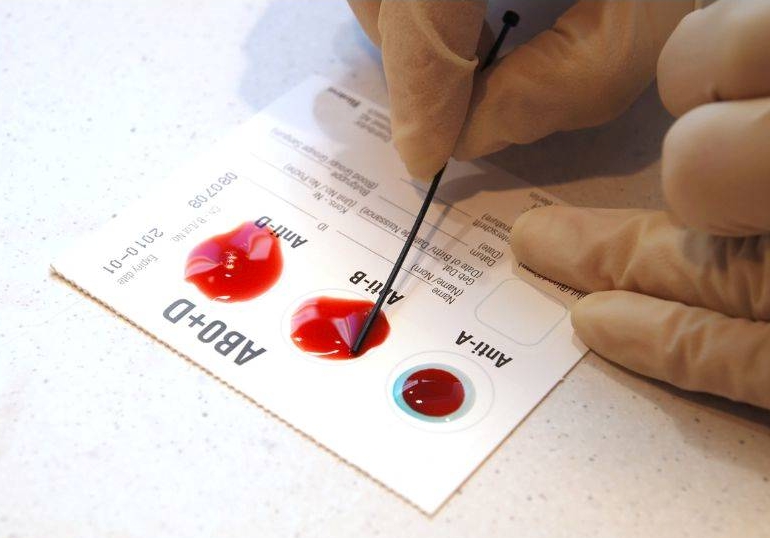
A variety of genetically determined antigens, known as agglutinogens or isoantigens, are present on the surfaces of red blood corpuscles. These antigens decide a person’s blood group.
The plasma contains antibodies called agglutinins.
Who discovered
In 1901, Karl Landsteiner described three main blood groups: A, B, and C (he later renamed C to O after the German Ohne, meaning without, zero, or null).
A year later, Alfred von Decastello and Adriano Sturli, two colleagues of Landsteiner, identified a fourth blood group – A.B.
Table of contents
- Introduction:
- Who discovered
- 1. ABO Subgroups:
- 2. Bombay Blood Group (Oh) or HH blood type:
- 3. Duffy Blood Group:
- 4. Diego Blood Group
- 5. Kidd Blood Group:
- 6. Langereis Blood Group:
- 7. Vel Blood Group:
- Etiology
- The causes of the high incidence of Golden blood type are
- Internal links:
- External links:
- Rare blood groups:
Rare blood groups:
There are several rare blood groups beyond the commonly known ABO and Rh systems. Some of these include:
1. ABO Subgroups:
The AB-negative blood group is one of the rarest of the eight common blood groups, in less than (one)1 % of the world’s population.
AB-negative individuals are universal blood recipients and plasma donors. They can receive blood from any group but only donate blood to the AB type. AB-negative blood has both A and B antigens and lacks Rh D antigen on its red blood cell membranes, but there are no antibodies in the plasma.
O negative blood type is a universal blood donor.
Within the ABO system, there are rare subgroups, such as A3, Ax, Am, and others, which have unique antigens.
2. Bombay Blood Group (Oh) or HH blood type:
This is a scarce blood type; occurrence is 4 /million of the world’s population.
Individuals with this blood type lack the H antigen, the precursor to the A and B antigens. People with Bombay blood type are also O-negative.
The absence of the H antigen causes Bombay blood type, which makes it very rare and challenging to find compatible blood for transfusions.
An individual with the Bombay blood group can donate blood to someone with the ABO system. However, he can only take blood from individuals with Bombay blood type.
3. Duffy Blood Group:
This group includes rare antigens like Fya, Fyb, Fyx, and Fy3. They are particularly relevant for people of African descent.
4. Diego Blood Group
This includes Diego a and Diego b antigens and is more commonly found in South American and Asian populations.
5. Kidd Blood Group:
Includes Jka and Jkb antigens and is relatively rare.
6. Langereis Blood Group:
This is extremely rare and involves the absence of the Kx antigen.
7. Vel Blood Group:
Individuals with this blood type lack the Vel antigen.
These are just a few examples, and many other rare blood group systems and variants exist within them. Due to their rarity, blood banks must maintain supplies of these types for individuals who may need them.
The Rarest Blood Type
The Golden or “Rh null” blood group is the rarest blood type.
The golden blood group is the rarest blood type; only 60 people worldwide have this blood type, which is why the Rh null blood type is known as the golden blood type.
All 61 possible Rh antigens are absent in a person having Rh null blood type.
Etiology
A genetic mutation causes the golden or “Rh null” blood type. Usually, the mutation is in the RHAG gene, which codes the Rh-associated glycoprotein that directs the Rh antigen to the red blood cell membrane.
Hereditary Staphylococcus is also associated with RHAG gene mutation. This disease is characterized by increased red blood cell breakdown, leading to chronic mild to moderate anemia.
The causes of the high incidence of Golden blood type are
1. Consanguineous marriage
2. Autosomal genes -abnormal genes.
3. Mutation or complete deletion of certain RHD or RHAG genes.
The golden blood type is prevalent in Aboriginal Australians.
Complications :
1. Mild to moderate degree of hemolysis due to
1. Abnormal red cell membrane
2. More fragile due to lack of Rh antigen.
3. Less elastic cell membrane.
4. Altered cell volume and
5. Abnormal shape of cells.
The rapid hemolysis leads to mild to moderate hemolytic anemia since birth.
2. Blood transfusion
Individuals with Rh-null can only receive blood from others of the same blood type. Since Rh-null blood is rare, finding compatible blood for transfusions can be challenging in emergencies.
Rh null blood type is a universal donor as it lacks antigens on RBCs.This blood can be given to anyone. However, a person with Rh null blood type must receive only Rh null; otherwise, there may be a severe mismatched blood transfusion reaction.
3. Rh incompatibility during pregnancy- Rh null mother and positive fetus.
4. An infection may accelerate hemolysis, leading to a hemolytic crisis, which can damage multiple organs, especially the kidneys.
5. Limited Blood Supply: Due to its rarity, Rh-null blood is limited in availability for individuals who require transfusions, especially in regions with smaller blood donor pools.
6. Emotional Impact: The knowledge of having such a rare blood type and its potential complications can also have emotional impacts on individuals and their families.
The “golden blood” refers to Rh-null blood type, which is extremely rare. While individuals with Rh-null blood are often referred to as “golden blood” because their blood can be used for transfusions by nearly anyone with a rare blood type, there can be complications associated with having this blood type:
Despite these potential complications, individuals with Rh-null blood play a crucial role in providing life-saving transfusions to others with rare blood types.
Internal links:
External links:
1.monroeclinic.org. http://2medicalcare.com/m/monroeclinic.org1.html
2. What Type Of Blood Is Rare? – The Things People Ask. https://thingspeopleask.com/what-type-of-blood-is-rare/
3. Paroxysmal Nocturnal Hemoglobinuria: Causes, Treatment Methods | DocHospitals. https://dochospitals.com/en/paroxysmal-nocturnal-hemoglobinuria-atc1329
Blood for test
 learn-and-fly.co.in