
What are the Signs and Symptoms of Dehydration?
How can you stay hydrated?
Who is more vulnerable to dehydration?
Why is hydration important?
Ways to Stay Hydrated in Summer?
How much water you should drink to stay hydrated?
Meta description: Drinking adequate water is a simple but ignored part of diet and self-care. For older people, drinking plenty of water is more important.
Keywords: Self care | Summer|Fluid |Water | wellbeing |Human Physiology |Prevention|Body water |Nutrition | Dehydration| Signs | symptoms
Table of contents:
- What are the Signs and Symptoms of Dehydration?
- How can you stay hydrated?
- Who is more vulnerable to dehydration?
- Why is hydration important?
- Ways to Stay Hydrated in Summer?
- How much water you should drink to stay hydrated?
- What are the Signs and Symptoms of Dehydration?
- How can you stay hydrated?
- Average total body water
- Who is more vulnerable to dehydration?
- Main causes of dehydration
- Why is hydration important?
Color of Urine:

Urine Colour Chart
Proper hydration is vital for overall good health. Drink an adequate amount of liquids to maintain a healthy fluid level.
What are the Signs and Symptoms of Dehydration?
Signs and symptoms of dehydration are:
1. Intense desire to drink water.
2. Dryness of throat, mouth, tongue, lips and eyes.
3. Weakness, lethargy, and tiredness.
4. Dizziness, lack of concentration, unconsciousness, and fainting.
5. Urine volume will decrease and become dark-colored (Some medicines may change the color of your urine.)
6. Skin becomes dry and lusterless.
7. Rapid thready pulse, rapid heart rate.
8. Rapid breathing.
If not treated at this stage, the degree of dehydration increases.
Severe dehydration is a medical emergency. Early vigorous treatment will save a life. Prompt fluid replacement will revert the condition. Otherwise, the person becomes unconscious, convulsions will occur, urine formation stops, and damage to multiple organs will develop rapidly, leading to death.
Therefore, maintain your hydration and protect your health. Drink water( fluid) for your overall health.
How can you stay hydrated?
Knowledge about total body water clarifies our concept of maintaining hydration. Drink plenty of water before you feel thirsty.

Total body water is distributed in the following compartments :
1. Extracellular fluid 20% of body weight 14 L
a. Interstitial fluid and 11 L
b. Blood Plasma 3L.
c. Transcellular Fluid 1-2 L.
2. Intracellular fluid. about 40% 28 L
The blood volume of adults is about 80 ml/kg of body weight, which is 8% of the total body weight. The average volume is 5L.
Blood Plasma is about 3L.
Transcellular fluid is usually not taken into account in calculations. It is present in the third space—in the organs, for example, the gastrointestinal tract, the cerebrospinal space as cerebrospinal fluid, the urinary bladder, and other organs.
These data may vary depending on many factors, such as methodology and sample size.
Average total body water
Total body water depends on age, sex, and adiposity.
In males -60% of body weight. In males range is 58 ± 8 %.’
In females -50-55% of body weight. In females range is 48 ± 6%.’
In obese people -45% of body weight. Because fat tissue contains only 10% of water, while muscle tissue contains 75%.
In infants -65-70% of body weight.
For example, water in a person of 60 kg is 60×60=3600/100 =36 liter. Or 36 kilograms.
Sources of water gain
Total body water –water comes into the body by:
1. Liquid ingestion and water in food -2100 ml/day varies according to habits, climate, etc.
2. Formed in the body from metabolism. Due to the oxidation of carbohydrates -200 ml/day.
Total =2300 ml/day.
Chart showing % of water intake in health
Sources of water loss:
Water loss from the body
1. Insensible water loss from skin:350 ml/day
2. Insensible water loss from lungs:350 ml/day.
3. Sweat ——————————- 100ml/day.
4. Faeces——————————— 100 ml/day.
5.Urine ———————————–1400 ml/day.
Chart showing % of water loss from the human body
In normal conditions, we lose about 2500 milliliters of water from our bodies in 24 hours; therefore, we must replenish this loss.
We must drink water before we feel thirsty.
How do we measure this volume?
You may be thinking about how to measure the volume, but it is easy.
A standard glass contains about 300 ml of water. Eight glasses of water in a day is all you have to drink.
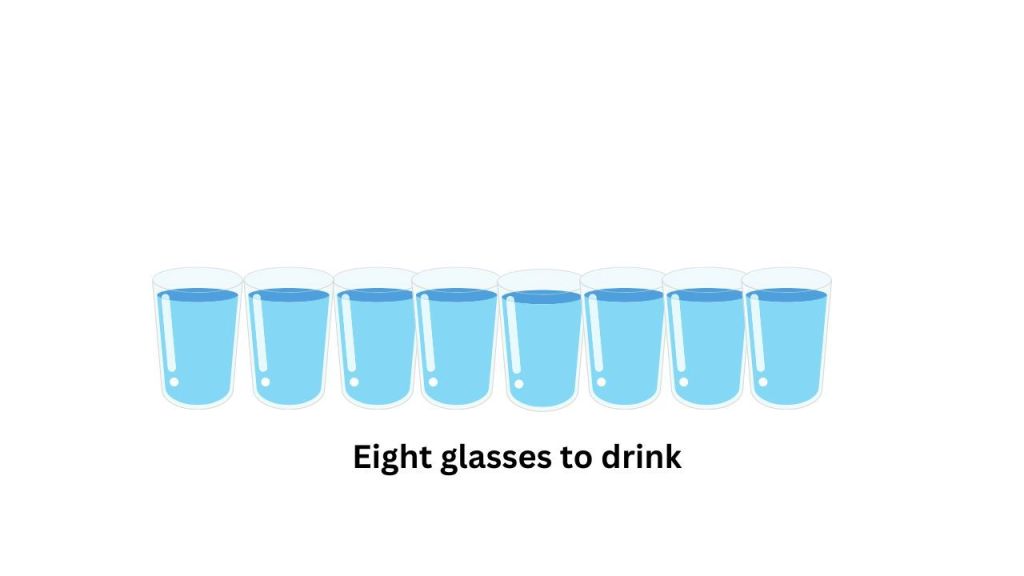
Drinking water
Who is more vulnerable to dehydration?
Anyone can become dehydrated,
Dehydration may affect anyone, but the following groups are more vulnerable:
1. Newborns and infants are more prone to develop dehydration. Water content in infants and newborns is 70-75% of their weight. Their body weight is less, and they suffer from dehydration; even a tiny volume of fluid is lost.
2. Older people are less sensitive about their water needs and are reluctant to drink water.
3. People suffering from some diseases like diabetes mellitus and diabetes insipidus.
4. Alcoholics
5. Athletes.
6. Heavy physical workers.
Main causes of dehydration
Many factors are responsible for dehydration:
1. Not drinking an adequate amount of water.
2. Not able to absorb water from the gastrointestinal tract.
3. Rapid water(fluid) loss from the body, like vomiting, diarrhea, and excessive sweating.
4. Fever, some diseases like diabetes mellitus, diabetes insipidus.
Why is hydration important?
Fluid (water) contributes about 60% of body weight. Life is not possible without water. It is present everywhere in our bodies: in the cell, outside the cell, in tissues, in organs, and the body spaces. It performs many functions.
Some functions to mention are:
Water is present in the cell, essential for all its functions. It maintains cell shape and size, both critical for cell survival. If water comes out of the cell, it shrinks, and its function is disturbed.
Memory, mood, and cognition functions depend on the proper amount of fluid in the cell.
It is present in the plasma and acts as a transporter.
Water is adequate for weight loss and weight management.
It is vital in temperature regulation.
Prevents stone formation in kidneys and gall bladder.
It maintains joint integrity-volume of synovial fluid.
Water improves detoxification.
Water helps remove waste through urine.
Maintains health and glow of the skin.
Tips to maintain your water intake!
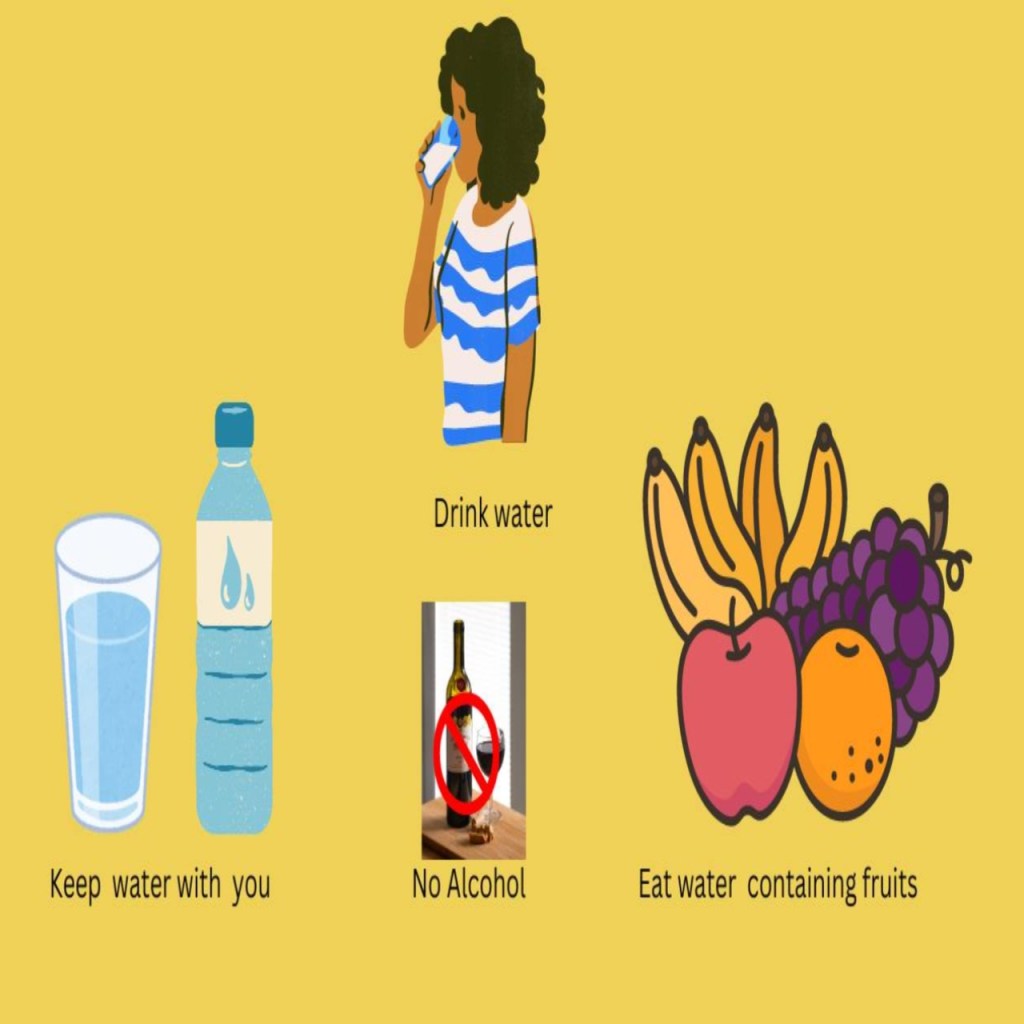
1. Do not ignore when you feel thirsty. Drink before you are thirsty.
2. Eat high water content fruits, vegetables, and foods.
3. Keep a water bottle with you.
4. Drink before exercise and go outside.
5. Check your urine for its volume and color.
6. Avoid drinks with caffeine and excess sugar.
Tags: Self care #Fluid and Electrolytes # Water # wellbeing #Human Physiology #Prevention # Body water# Nutrition
Internal links:
Protect yourself from Heatstroke.
What is Aquaporin
Total Body Water
External links: https://health.unl.edu/10-tips-staying-hydrated-summer%C2%A0
FAQ:
Q1. What can I add to water to make it more palatable?
A. You may add lemon or lime to make water more palatable
Q2. Why drink fluid before going outdoors?
A. Drinking water before going outdoors is beneficial as it helps to pre-hydrate your body, preparing it for the upcoming heat and potential fluid loss.
- Ways to Stay Hydrated in Summer?
- Who is more vulnerable to dehydration?
 learn-and-fly.co.in