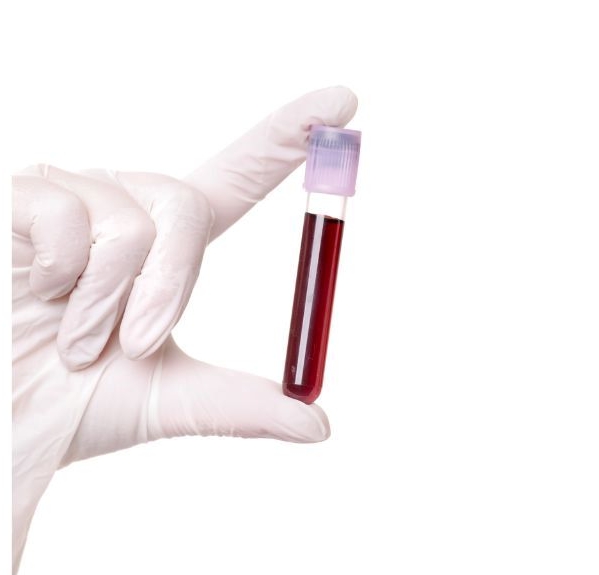
This article will delve into the Bilirubin estimation procedure, a crucial tool in diagnosing liver diseases. Understanding this procedure is of utmost importance for medical professionals and laboratory technicians, as it can significantly enhance the accuracy of their diagnoses.
Table of content
- Introduction
- Principle of estimation:
- Apparatus and reagents:
- Procedure:
- Procedure to determine Total Bilirubin:
- Quality control
- Precautions:
- Other methods to determine Bilirubin in blood:
- Why is bilirubin estimation performed?
Introduction
Bilirubin is an orange-yellow pigment present in the blood. It is a degraded product of the hemoglobin of red blood cells. Bilirubin occurs in the normal catabolic pathway of red blood cells. The average total bilirubin level is 1.2 mg/dL of blood.
Jaundice will appear when the total bilirubin level becomes 2 mg/dL of blood and more.
There are two types of Bilirubin present in the blood. One is conjugated Bilirubin, and another is unconjugated.
Bilirubin is formed by the destruction of RBCs, mainly and usually by the destruction of senile red blood cells, but in pathological conditions, it may also be due to the destruction of normal and abnormal red blood cells.
Little Bilirubin is formed in the bone marrow during normal erythropoiesis.
After formation, Bilirubin enters the blood and liver, where a sugar molecule, glucuronic acid, is added by a process involving many enzymes called Glucuronidation. Now, this Bilirubin is water-soluble and known as conjugated Bilirubin.
Some amount of Bilirubin fails to conjugate and remains attached to albumin. This fraction of Bilirubin is water-insoluble and called unconjugated Bilirubin or indirect Bilirubin.

LIVER
Liver
The conjugated Bilirubin is water soluble and reacts directly in aqueous solution (Direct Bilirubin).
Unconjugated Bilirubin or free Bilirubin is water-insoluble. The addition of dimethylsulphoxide makes it water-soluble and reacts (Total Bilirubin).
The unconjugated Bilirubin is determined by subtracting direct Bilirubin from total Bilirubin.
[Total bilirubin-direct bilirubin= Indirect bilirubin.]
Among the various methods for determining serum bilirubin, the Diazo Reaction stands out as the ‘Gold standard’. Its reliability and accuracy make it a cornerstone in bilirubin estimation.
Principle of estimation:
Bilirubin estimation depends on its conversion to a pink pigment known as ‘Azobilirubin’ by ‘diazotized sulfanilic acid’ and is measured photometrically using a Colorimeter. The intensity of the color developed is proportional to the bilirubin concentration in the sample.
In 1918, van den Bergh described this method for determining the bilirubin level in blood. After that, many modifications and improvements were made.
The main object is that Bilirubin reacts with diazo reagents to form pigmented Azopigments -azodipyrroles. This reaction is accelerated by the addition of some substances.
Azo pigments are measured by spectrophotometry at 530 to neutral or acid pH and 598 nm to alkaline pH.
The diazo reaction is accelerated by alcohol (methyl alcohol) and myriad compounds, such as sodium benzoate, methanol, etc. These compounds are known as accelerators. In the presence of accelerators, total Bilirubin is estimated, whereas conjugated Bilirubin is determined in the absence of accelerators.
Apparatus and reagents:
Apparatus:
Colorimeter or Spectrophotometer measuring at 555 nm.
Matched cuvettes 1.0 cm light path.
Pippete and other general pathological laboratory equipment.
Reagents:
All the agents are ready to use.
| R1 | Sulfanic acid | 30 mmol/L |
| Hydrochloric acid | 130 mmol/L | |
| Dimethylsulphoxide (DMSO) | 7 mol/L |
| R2 | Sulfanic Acid | 30 mmol/L |
| Hydrochloric acid | 130 mmol/L |
| R3 | Sodium nitrate | 0.74 mmol/L |
Procedure:
To estimate direct Bilirubin:
Blood is taken from the antecubital vein, and serum is obtained by centrifuging at a speed of 3000 rpm for 30 minutes.
In a cuvette 1 cm light path, take the following reagents and serum/plasma by micropipette.
| Reagents and sample | Assay tube | Blank tube |
| R2 in microliter | 1000 | 1000 |
| R 3 in microliter | 50 | —– |
| dH2O | —- | 50 |
| Sample-serum/Plasma | 100 | 100 |
Mix and incubate precisely for 5 minutes at room temperature. Then, add the sample in the requisite amount and immediately note the reading.
Calculation of direct Bilirubin:
Direct bilirubin in mg/deciliter
=(absorbance of assay-absorbance of blank) x11.4.——CB
Where 11.4 is a standard factor, where absorbance is recorded (1).in a cuvette of 1cm path length at 550 nm wavelength, and (2) 37 degrees Celsius temperature.
Procedure to determine Total Bilirubin:
In a cuvette 1 cm light path, take the following reagents and serum/plasma by micropipette.
| Reagents and sample | Assay tube | Blank tube |
| R 1 in microliter | 1000 | 1000 |
| R 3 in microliter | 50 | — |
| d H2O microliter | — | 50 |
| Sample-serum/plasma | 100 | 100 |
Mix and incubate precisely for 5 minutes at room temperature. Then, add the sample and immediately note the reading.
Calculation of total Bilirubin:
Total bilirubin in mg/deciliter:
=(absorbance of assay-absorbance of blank) x11.4.—–TB
Where 11.4 is a standard factor, where absorbance is recorded (1).in a cuvette of 1cm path length at 550 nm wavelength, and (2) 37 degrees Celsius temperature.
Calculation of indirect Bilirubin:
Total bilirubin-conjugated bilirubin=indirect Bilirubin.
(TB-CB).
Quality control
1. Control sera are recommended to monitor the result.
2. Check the instruments, reagents calibrator, and human resources.
3. Each laboratory should have its quality control scheme and reference range.
4. There may be variations in the results of bilirubin estimation.
Precautions:
1. Serum or plasma is taken, protected from direct sunlight, and measured immediately. However, Bilirubin is stable at 2-8 degrees Celsius for four days and at—20 degrees Celsius for two months.
2. Blood sample is collected with proper antiseptic and aseptic procedures and kept properly.
2. Avoid contact with reagents.
3. Check the reagents -expiry date. Do not use expired or altered reagents.
Other methods to determine Bilirubin in blood:
1. Vandate oxidase method
2. Chromatographic methods
3. Electrophoresis methods
4. Electrochemical methods
Enzyme based
Non-enzymatic
5. spectroscopic methods
Fluorescence spectroscopy
Spectrophotometry
Luminescence spectroscopy
Direct spectrometry
6. High-performance liquid chromatography (HPLC).
7. Transcutaneous methods.
Why is bilirubin estimation performed?
The levels of both conjugated and unconjugated Bilirubin provide crucial information in the diagnosis of liver diseases such as hepatitis, cirrhosis, and jaundice. Understanding these levels is of utmost importance in the medical field.
Disclaimer: All possible measures have been taken to ensure the accuracy and reliability of the information; however, totalphysiology.com does not take any liability for using any information provided by the website solely for viewers. The information is provided as an educational service and public awareness. It is not medical advice.
If you have any medical issues, we advise you to seek the advice of a qualified doctor and follow his instructions.
External link:
https://www.bajajfinservhealth.in/articles/jaundice-symptoms
Thank You.
See you in the following article.
 learn-and-fly.co.in
Leave a comment