Blood is a living connective tissue in a fluid state. When compared to water, blood is denser and more viscous than water and clots outside the body. It is present in the heart and blood vessels.
Color of the blood
Blood is red in color due to presence of haemoglobin in red blood cells. The blood is bright red when haemoglobin is oxygenated and dark red when haemoglobin is deoxygenated.
Crculation of blood
The heart pumps oxygenated blood in the arterial system, blood vessels and circulates throughout the body and deoxygenated blood returns to the right side of the heart via the venous system.The deoxygenated blood is oxygenated in the lungs ,then to the left side of the heart which pumps blood in the blood vessels, and in this way blood circulates in the body.
Table of contents
1.
Definition
2.
Colour
3.
Volume
4.
Composition
6.
Functions
Table
Total blood volume
Total blood volume is 80 milliliter per kg of bodyweight. Usually, 5 – 6 liters (average 5 liters).
Composition of blood
A. Fluid portion: This is known as plasma, and constitutes 55% of the total blood volume. It is a clear straw-colored portion of the blood and has 91% water and the rest 9% solids in it. The solid substances are:
Inorganic -1% sodium, potassium, calcium, magnesium, phosphate, iron, etc., in ionic form and
Organic substances -7% plasma protein and 1% non-protein nitrogenous substances like sugar, fat, enzymes, etc.
B. Formed elements of blood constitute 45% and are of three types :
Erythrocyte: Red blood corpuscle – Red blood cell.
Leucocyte: White blood cell.
Thrombocyte: Platelet.
Formed elements of blood can be divided into two types:
Nucleated: White blood cells
Non-Nucleated: Red blood cells and Platelets.
The differences in Plasma and Serum
Plasma is blood minus formed elements of blood, i.e., cells of the blood.
Serum = Plasma – fibrinogen, prothrombin, liable factor or proaccelerin and anti-hemophilic factor (AHF).
The serum is Plasma minus fibrinogen and some clotting factors-factor II, V, and VIII. Other clotting factors VII, X, XI, and XII, are present in the serum.
Functions of blood:
A.Transportation:
Oxygen from lungs to the cells and
2. Carbon dioxide from cells to the lungs.
3. Absorbed nutritive materials from the GIT to the tissues for utilization and storage.
4. Metabolite waste from the tissues to the excretory systems.
B. Homeostasis -controls the internal environment of the cells.
Definition: Acclimatization is the physiological process in which an individual adjusts to changes in the environment to survive. Acclimatization is also known as acclimation or acclimation. This occurs in a brief period –hours to weeks and may persist lifelong.
Acclimatization to new environments occurs in many species.
Adaptation is an evolution that involves many generations.
1.
Definition
2.
High altitude
3.
Partial Pressures
4.
Mountain sickness
5.
Acclimatization
6
Main changes
Acclimatization to high altitude:
Barometric pressure decreases when altitude increases linearly, but the percentage of air composition remains the same up to the mesosphere layer. For example, the percentage of oxygen in the atmosphere remains constant at 21%, but the atmospheric partial pressure reduces proportionately to the barometric pressure. Above the mesosphere layer, the composition of the air is variable.
What is high altitude?
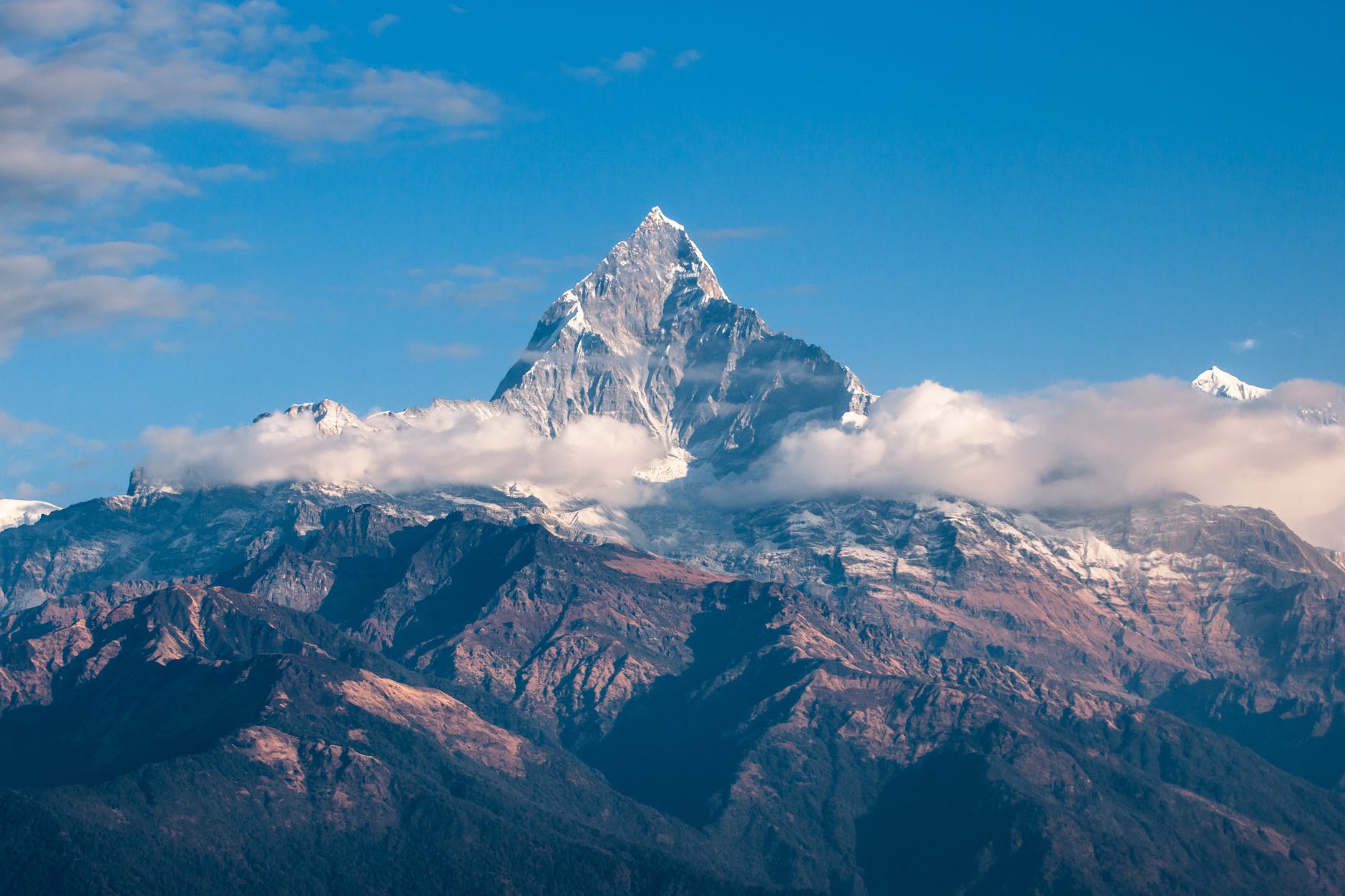
High altitude usually refers to an attitude over 2500 meters to 3000 meters.
The partial pressures:
The partial pressure of vapor depends on body temperature and is independent of high altitude. According to the ‘Environmental Lapse Rate,’ air temperature changes at high altitudes. But our body temperature remains within a normal range.
The alveolar partial pressure of carbon dioxide depends on the body’s metabolism and respiration. When metabolism increases, carbon dioxide production increases. Increased carbon dioxide stimulates ventilation.
Increased ventilation removes carbon dioxide from the body, reducing partial pressure falls.
Metabolic production of carbon dioxide does not alter with increasing altitude, so the partial pressure of carbon dioxide( pco2 )will not change until there are some underlying renal or pulmonary diseases.
There is a progressive decrease in partial pressure of Oxygen and Nitrogen with increasing altitude. Decrease partial pressure of Nitrogen produces no ill effect.
But decreased partial pressure of oxygen at high altitude produces ill effects. The effects produced are similar to the effects of hypoxic hypoxia.
The harmful effects of partial pressure of oxygen depend on
1 . Rapidity of development of hypoxia: that is in sudden or acute ascent and
2. Gradually, hypoxia develops in slow ascent, and the duration of exposure is prolonged. It is present in permanent residents at high altitudes.
Rapid ascent to 10,000 feet can produce cerebral and pulmonary edema in persons engaged in heavy physical work during the first three days after arrival. After that, the conditions respond to rest and oxygen therapy.
Thecerebral and pulmonary edemas do not develop in individuals who gradually ascend to high altitude and avoid physical exertion at rest for a few days.
The exact cause is not known but, probable causes of hypoxic pulmonary edema are:
Hypoxia increases sympathetic activity, which causes vasoconstriction leading to an increase in the pulmonary capillary hydrostatic pressure. As a result, plasma and fluid will come out from the pulmonary capillary and cause pulmonary edema.
In the brain, the exact mechanism causes cerebral edema.
Mountain sickness At a higher altitude, a person may suffer from mountain sickness when the effects of hypoxia are not very serious. During gradual ascent, the body gets time to adjust to the new environment.
Mountain sickness starts at a high altitude after 8 to 12 hours of arrival and remains for 28 days. The cause is not well known, but it is associated with cerebral edema and alkalosis.
Mountain sickness is characterized by :
Nausea, vomiting, headache, irritability, and dyspnea may occur.
Pathophysiology of development of cerebral edema:
At higher altitudes, when the autoregulatory mechanism of the brain fails, capillary pressure increases, causing transduction of fluid in the brain, tissue. Accumulation of fluid in the brain will increase intracranial pressure, disturb its normal functions, and cause herniation of the brain tissue.
Respiratory alkalosis is due to hyperventilation:
Respiratory alkalosis is a severe condition and must be treated promptly. Otherwise, it may cause disorientation, coma, and death.
Prevention of mountain sickness:
Mountain sickness can be prevented by:
1. Very slow ascent,
2. Administration of Oxygen,Glucocorticoids, Calcium channel blockers, and Carbonic anhydrase.
Acclimatization
Acclimatization to high altitudes is a process by which an individual response to the reduced atmospheric partial pressure of oxygen. Reduction in partial pressure of oxygen initiates many different changes to increase the oxygen level at the tissue level.
This acclimatization reduces the effects of hypoxia by changes so that persons living at high altitudes and permanent residents can enjoy ordinary lives.
The main changes are:
1. Increase in pulmonary ventilation
2. Affinity of the hemoglobin for oxygen increases due to the rise in 2-3 DPG in red blood cells, secondary to increased pH. This 2-3 DPG shifts the oxygen hemoglobin dissociation curve to the right, releasing more oxygen from hemoglobin at the tissue level.
3. An increase in hemoglobin concentration occurs.
Hypoxia is a powerful stimulation for erythropoietin secretion that stimulates erythropoeisis at all stages and causes the release of red blood cells in circulation.
In permanent residents, the total count of red blood cells is about 8 million per cubic ml of blood. In addition, hemoglobin concentration increases, so the oxygen-carrying capacity of the blood increases. However, It is prolonged, and hemoglobin concentration rises after 2-3 weeks. Therefore, hemoglobin concentration is 20 grams per deciliter of blood in a permanent resident of a higher altitude. The average hemoglobin concentration is about 14.5 grams per deciliter of blood.
Hypoxia causes increased vascularity of the tissues by opening many existing tissue capillaries and forming new blood vessels. Vascular neogenesis is the formation of new blood vessels.
. Hypoxia causes vasodilatation, so that blood flow increases. In addition, hypoxia induces vascular endothelial growth factor, which stimulates vascular neogenesis. Other growth factors also help in vascular neogenesis.
Hypoxia increases Pulmonary artery pressure that opens many pulmonary capillaries and increases diffusion at the tissue level.
Hypoxia increases myoglobin synthesis, number of Mitochondria.
Acclimatized subjects may suffer from mountain sickness due to renal failure and if the cardiovascular regulatory mechanism fails or there is a decrease in sensitivity of peripheral chemoreceptors.
You may purchase monitor I am using by using the code
What is atmospheric pressure?|Effects of high pressure on human body|
The atmosphere exerts pressure on the human body. This is known as atmospheric pressure. At sea level, it is 760 mm. of mercury which is called 1 (one) atmospheric pressure.
Table of contents:
1.
Definition
2.
Composition of air
3.
The partial pressure of gases
4.
How to calculate the partial pressure
5.
The relevant law of gases
6.
Important effects of high pressure
The atmospheric pressure decreases with an increase in height and increases with an increase in depth. In this article, I will discuss some important effects of high atmospheric pressure on the human body.
Composition of air:
Gases present in the air
% of gas in the air
partial pressure in mm. of Hg
Nitrogen
78.06%
593.25
Oxygen
20.98%
160
CO2
0.03%
0.23
Inert gases
0.93%
7.068
Composition of air and pressure exerted by them
Partial pressure is the pressure exerted by anyone gas in a mixture of gases, and the total pressure of the gas mixture is the sum total of the partial pressures of gases present in the gas mixture. Air is a mixture of gases as stated above.
The partial pressure of a gas is calculated as below:
The partial pressures of Nitrogen= % of the nitrogen in the air is multiplied by total atmospheric pressure divided by 100 which is 78.06 x760 divided by 100 =593.25 mm. of mercury.
By this method, the partial pressure of oxygen is 160mm. of mercury and that of Inert gases and CO2,are7.068 and 0.23mm. of mercury. respectively.
Boyl’s law: Volume of a gas is inversely proportional to the pressure exerted on it.
( temperature is constant.) Suppose when pressure is X1 atmospheric pressure, the volume of air is V1. If atmospheric pressure rises to 2X, the volume of air will decrease to half 0.5 V. and so on.
Dalton’s law: States that the total pressure of a gas mixture is the sum total of the partial pressures of gases present in the gas mixture. Air is a mixture of gases as stated above and obeys this law.
Henry’s law: states that the amount of gas dissolved in any solution is directly proportional to the partial pressure of the gas.
Volume of a gas is directly proportional to temperature. When the temperature rises volume of a gas will increase and vice versa, when pressure is constant.
Diffusion of a gas in a liquid depends on the pressure differences and it moves from high to low pressure. When pressure of the gas is more it will enter in the liquid and when pressure decreases gas will come out from the liquid. Solubility of a gas differs in different liquids.
Atmospheric pressure becomes double at 10 meters below the sea level, volumes of gas will decrease to half. Due to raised pressure, Oxygen and Nitrogen will enter into the body fluids and tissues. Increased oxygen will cause oxygen toxicity and excess nitrogen will cause nitrogen narcosis.
If we Have added some content that belongs to you or your organization by mistake, We are sorry for that. We apologize for that and assure you that this won’t be repeated in the future. If you are the rightful owner of the content used in our Website, please mail us with your Name, Organization Name, Contact Details, Copyright infringing URL, and Copyright Proof (URL or Legal Document) at bkpdphysiology@gmail.com
I assure you that, I will remove the infringing content Within 48 Hours.
My name is Dr.Bijay Krishna Prasad, Professor of Physiology and Head of the Department of Physiology A.N.M.Medical College, Gaya. I am a doctor and a teacher and passionate about teaching, writing, and sharing my knowledge with everyone. I have written two books ‘Practical Physiology-Haematology’ and ebook- Digestive system part-one. This is my first website. This Learn and fly. co.in is about different subjects, to increase knowledge which will help everyone to achieve goals.
As I am a professor of physiology I will write about as I am a professor of physiology I will also write about human Physiology, describing the structures and functions of different organs and systems of the human body and some common diseases for public awareness and knowledge.
My ‘https://totalphysiology.com’ blog is about human Physiology, describing the structures and functions of different organs and systems of the human body in detail. An educational blog for medical students, doctors, students of Physiology, and readers to add something to their knowledge and skill.
I am Dr.(Prof.) Bijay Krishna Prasad, Professor of Physiology and Head of the Department of Physiology.
Full Name: Dr.Bijay Krishna Prasad,
Nick Name: Bijay
Designation: Professor of Physiology and Head of the Department of Physiology. Blogger, Youtuber.Date of Birth -19/04//1957, Place of Birth -PATNA, BIHAR.INDIA.Education: School: Miller Higher Secondary School, PATNA, BIHAR.
Higher Education: M.B.B.S. from Darbhanga Medical College and Hospital. Lalit Narain Mithila University, Laheriasarai, Bihar, India.
Post-graduation from Patna Medical College and Hospital, Patna University. My life is simple. I started blog writing during Covid -19 epidemic from 10th October 20 for my students and the general public to enrich their knowledge.
Marital Status -Married,
Hobby: reading, writing, and visionary. E-mail bkp337390@ gmail.com bijaykrishnaprasadTwitter : bijaykrishnapr3Linkedin: https://linkd.in/g8fDyed.Qura:Dr.Bijay’s Health TopicsFacebook:9835050176
I am working with Sri Vishal Krishna Prasad, Engineer, MBA, and Trainer.
Full Name: Vishal Krishna Prasad, Nickname: Vishal
Designation: Senior Manager -multinational company. Engineer, MBA, and Trainer.Blogger, Youtuber, and Writer.
Privacy Policy: Your privacy is important to us. ‘Learn—and -Fly.co.in’ respects your privacy regarding any information we may collect from you on our website and other sites we own and operate. We only ask for personal information when we truly need it to provide a service to you. We collect it fairly and legally, with your knowledge and consent.
We also explain why we’re collecting it and how it will be used. We only retain collected information for as long as necessary to provide you with the service you requested. We protect the data we store within commercially acceptable means to prevent loss, theft, and unauthorized access, disclosure, copying, use, or modification.
We don’t publicly share any personally identifying information with third parties except when required by law. Our website may link to external sites that we do not operate. Please be aware that we have no control over the content and practices of these sites and cannot accept responsibility or liability for their respective privacy policies.
You are free to refuse our request for your personal information, with the understanding that we may be unable to provide you with some of your desired services. Your continued use of our website will be regarded as acceptance of our practices around privacy and personal information. Feel free to contact us if you have any questions about how we handle user data and personal information.
Cookie Policy for learn and fly .co. : This is the cookie policy for learning and flying .co.in, accessible from the URL. What Are Cookies? As is common practice with almost all professional websites, this site uses cookies and tiny files downloaded to your computer to improve your experience. This page describes what information they gather, how we use it, and why we sometimes need to store these cookies. We will also share how you can prevent these cookies from being stored; however, this may downgrade or ‘break’ certain elements of the site’s functionality. How We Use Cookies We use cookies for various reasons detailed below.
Unfortunately, in most cases, there are no industry standard options for disabling cookies without completely disabling the functionality and features they add to this site. It is recommended that you leave on all cookies if you are unsure whether you need them, mainly if they are used to provide a service you use. Disabling Cookies: You can prevent cookies by adjusting the settings on your browser (see your browser Help for how to do this). Be aware that disabling cookies will affect the functionality of this and many other websites that you visit. Disabling cookies will usually also result in disabling certain functionality and features of this site. Therefore, it is recommended that you do not disable cookies. The Cookies We Set Account-related cookies If you create an account with us, we will use cookies to manage the signup process and general administration. These cookies will usually be deleted when you log out; however, in some cases, they may remain afterward to remember your site preferences when logged out. Login-related cookies: We use cookies when you are logged in, so we cannot forget this fact. This prevents you from having to log in every time you visit a new page. These cookies are typically removed or cleared when you log out to ensure that you can only access restricted features and areas when logged in.
Email newsletters-related cookies: This site offers newsletter or email subscription services, and cookies may be used to remember whether you are already registered and whether to show certain notifications that might only be valid to subscribed or unsubscribed users. Orders processing-related cookies This site offers e-commerce or payment facilities. Some cookies are essential to remember your order between pages so we can process it properly.
Surveys-related cookies: From time to time, we offer user surveys and questionnaires to provide you with interesting insights and helpful tools to help you understand our user base more accurately. These surveys may use cookies to remember who has already taken part in a survey or provide accurate results after you change pages.
Forms-related cookies: When you submit data through a form such as those found on contact pages or comment forms, cookies may be set to remember your user details for future correspondence.
Site preferences cookies: To provide a great experience on this site, we provide the functionality to set your preferences for how this site runs when you use it. To remember your preferences, we need to set cookies so that this information can be called whenever you interact with a page affected by your preferences.
Third-Party Cookies: In some special cases, we also use cookies provided by trusted third parties. The following section details which third-party cookies you might encounter on this site. This site uses Google Analytics, one of the most widespread and trusted analytics solutions on the web, to help us understand how you use the site and how we can improve your experience. These cookies may track how long you spend on the site and the pages you visit so we can continue producing engaging content. See the official Google Analytics page for more information on Google Analytics cookies. Third-party analytics are used to track and measure the usage of this site so that we can continue to produce engaging content. These cookies may track how long you spend on the site or pages you visit, which helps us understand how we can improve the site for you. We sometimes test new features and make subtle changes to how the site is delivered. When we are still testing new features, these cookies may be used to ensure that you receive a consistent experience whilst on the site and ensure we understand which optimizations our users appreciate the most.
As we sell products, it’s important for us to understand statistics about how many of the visitors to our site actually make a purchase, and as such, this is the kind of data that these cookies will track. This is important to you as it means we can accurately make business predictions to monitor our advertising and product costs to ensure the best possible price. We also use social media buttons and/or plugins on this site that allow you to connect with your social network in various ways. For these to work, the following social media sites, including {List the social networks whose features you have integrated with your site?:12}, will set cookies through our site, which may be used to enhance your profile on their site or contribute to the data they hold for various purposes outlined in their respective privacy policies. More Information?
Hopefully, that has clarified things for you, and as was previously mentioned, if there is something that you aren’t sure whether you need or not, it’s usually safer to leave cookies enabled in case it does interact with one of the features you use on our site. This policy is effective as of Nov 2021.




 learn-and-fly.co.in